
New research from Acron Aviation reveals a gap between how prepared US airlines say they are for ADS-B In and how well key professionals know the technology itself. The ALERT Act, which has passed the US House of Representatives and is now pending in the Senate, would require ADS-B In equipage on most aircraft by December 31, 2031. Against that backdrop, the findings point to a readiness story that is more complicated than headline adoption figures suggest.
ADS-B In is the receiving half of the ADS-B system already fitted to commercial aircraft. ADS-B Out broadcasts an aircraft's position to air traffic control. ADS-B In receives the same data from other aircraft and displays it on a cockpit screen, giving pilots a GPS-precision view of surrounding traffic up to 180 nautical miles, updated every second. The technology is designed to support pilot decision-making on spacing, separation and conflict avoidance.
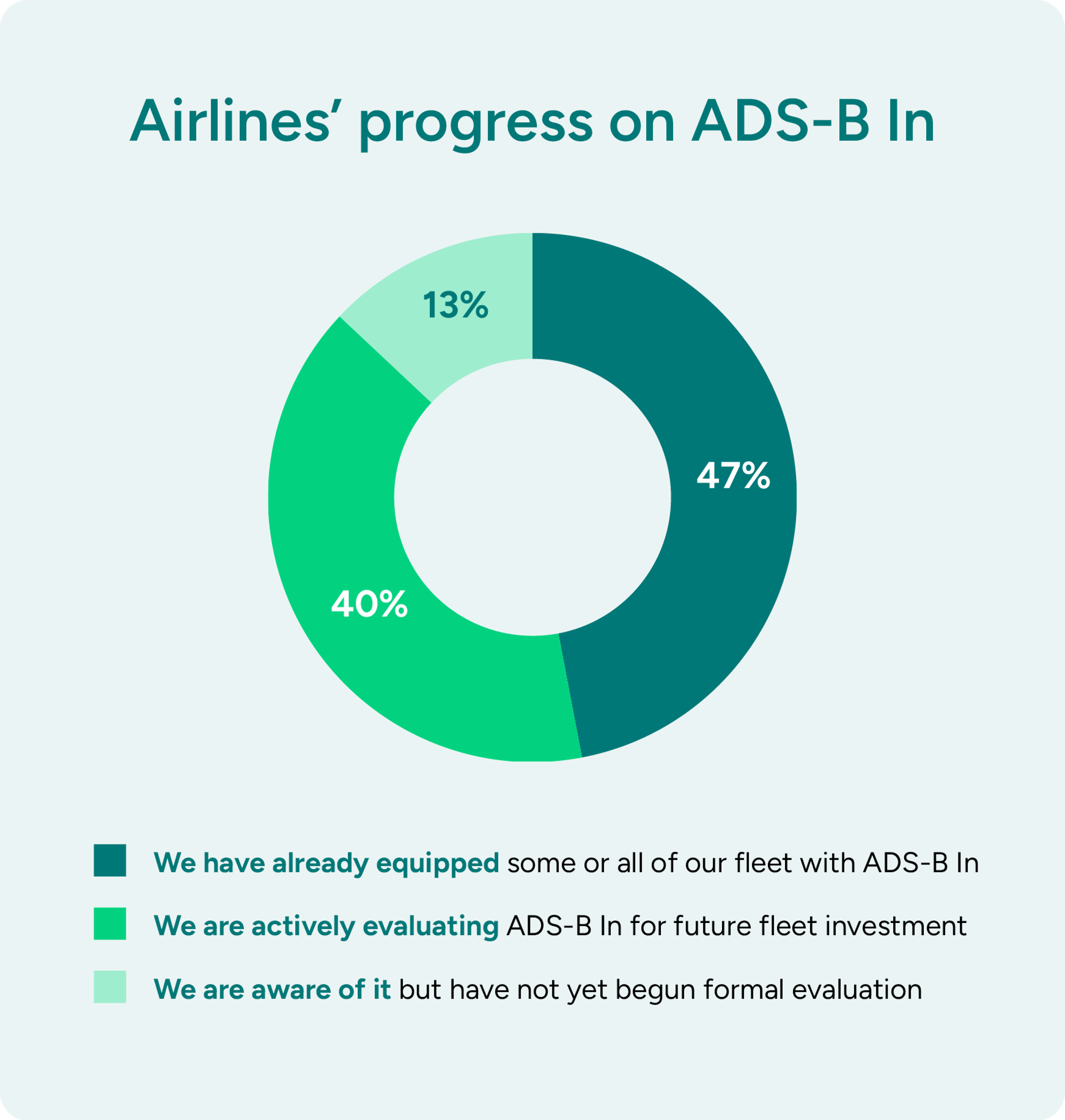
The data comes from a new Acron Aviation report ‘ADS-B In: Industry readiness report 2026’ which is based on an online survey of 100 US airline leaders conducted in April this year. Almost half of respondents (47%) report equipping some of their fleet with ADS-B In, and a further two in five (40%) are actively evaluating the technology. Nine in ten (86%) believe they can comply with a mandate inside three years.
As a cohort, many aviation leaders demonstrated gappy understanding of ADSB-In, with over half of respondents (51%) describing their grasp of ADS-B In as topline, with one in ten (9%) only slightly familiar with it. On the distinction between ADS-B In and ADS-B Out, which has been mandated in US controlled airspace since 2020, a third (34%) do not understand the difference.
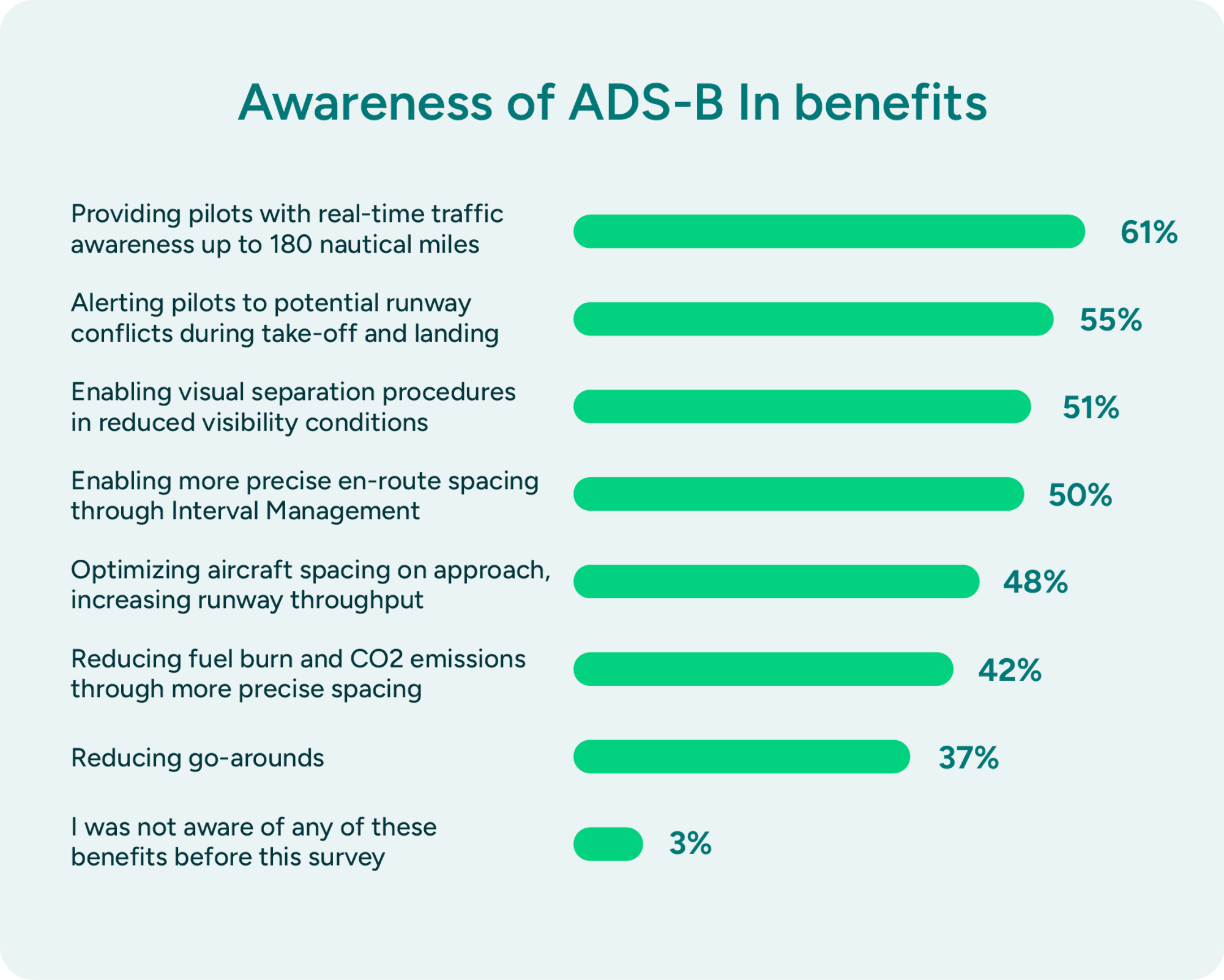
Awareness of the specific benefits ADS-B In brings is also weak. The headline benefit; real-time traffic awareness up to 180 nautical miles, is known by six in ten (61%). Half (50%) are aware of Interval Management for en-route spacing.
Fewer know about the operational gains: two in five (42%) on reduced fuel burn and CO2 decreases, and just over a third (37%) on the reduction of go-arounds.
Cost is the leading barrier to investment, cited by 38%, followed by competing capital priorities (33%) and the absence of a regulatory mandate (26%). A quarter (25%) cite insufficient awareness of the technology itself.
"The airlines that see the most benefits from ADS-B In will be the ones that treat it as an operational investment with measurable returns in fuel, capacity and on-time performance."
Damien MoreauPresident, ACSS
Damien Moreau, President of ACSS, said: "The data shows the appetite for ADS-B In exists. This study also tells us that boardroom confidence is outpacing what's actually understood about the technology at the decision-making level, so the industry needs to work to educate people on the real advantages it brings. The airlines that see the most benefits from ADS-B In will be the ones that treat it as an operational investment with measurable returns in fuel, capacity and on-time performance."
Cam Morast, Product Manager at ACSS, said: "ADS-B In can be installed in as little as 1-2 shifts, so there’s no lengthy downtime for aircraft. In addition, fleets equipped with the technology will see meaningful operational returns. The two-year FAA evaluation at Dallas-Fort Worth with American Airlines logged an average 12-second reduction in arrival spacing, equating to four to five extra landings per hour, per runway, with 490,000 lbs of fuel saved in the first year alone, and zero separation-related safety incidents."
The full report, including the readiness data, investment drivers and barriers, is available at here.


