

In the past, effective truck driver training required significant time on the road or a closed training facility. Drivers needed hands-on experience to practice maneuvers, develop safe driving habits and become comfortable operating commercial vehicles. This approach often created challenges for fleet operators, including:
Today, simulator-based training allows fleets to improve safety, reduce training costs and prepare drivers for challenging situations that may be difficult or dangerous to recreate on the road. Solutions like the TranSim™ CDL driving simulator help make that training possible.
Those who have not experienced a high-quality, simulator-based truck driver training system might be skeptical about replacing some on-the-road experience with a digital simulator. However, DTS simulators engage users’ senses to provide a realistic experience.
Our CDL truck simulators come with three 55-inch 4K LCD screens that mimic the same view that trainees would see out of the windshield of their truck. There are also adjustable mirrors to further instill the feeling of being in a truck cab.
Using a DTS simulator gives users real-time feedback thanks to its force feedback steering column. This provides drivers with a better idea of the full weight of the vehicle they are simulating.
Users driving a commercial truck must compensate for the center of gravity in simulations like they would on the road. They also have to perform turns carefully to avoid an accident in the simulation, just as in real life.
If roads are slick in the simulation, the steering column acts accordingly, making it easier to lose control if not used properly. Simulation road conditions include varied weather patterns, types of roads and hazards such as the presence of potholes or objects on the road.
A DTS simulator features a 6-channel surround-sound system and sub-audio tactile transducer. This system mimics the real sounds of being in a truck cab to help drivers get used to the noise. It also generates vibrations for an additional layer of immersion.
There are many benefits of incorporating simulator-based driver training into a CDL fleet’s training program instead of relying solely on traditional on-the-road instruction.
With traditional road training, it is difficult to train new drivers on the various road hazards that can occur unless they happen in the moment. You would have to create situations in which the driver has to deal with vehicle malfunctions, bad road conditions and the appearance of animals or pedestrians on the road.
Instinct takes time to develop, and new drivers may panic in unexpected situations. Panicked drivers make mistakes that can lead to injuries and vehicle damage.
A lifelike driving simulator allows drivers to experience these events virtually, so they can learn how to respond to each scenario appropriately. They can develop their instincts in a safe environment.
Time, money and resources are the foundational pillars of any successful trucking company. Investing in simulated training improves the use of all three.
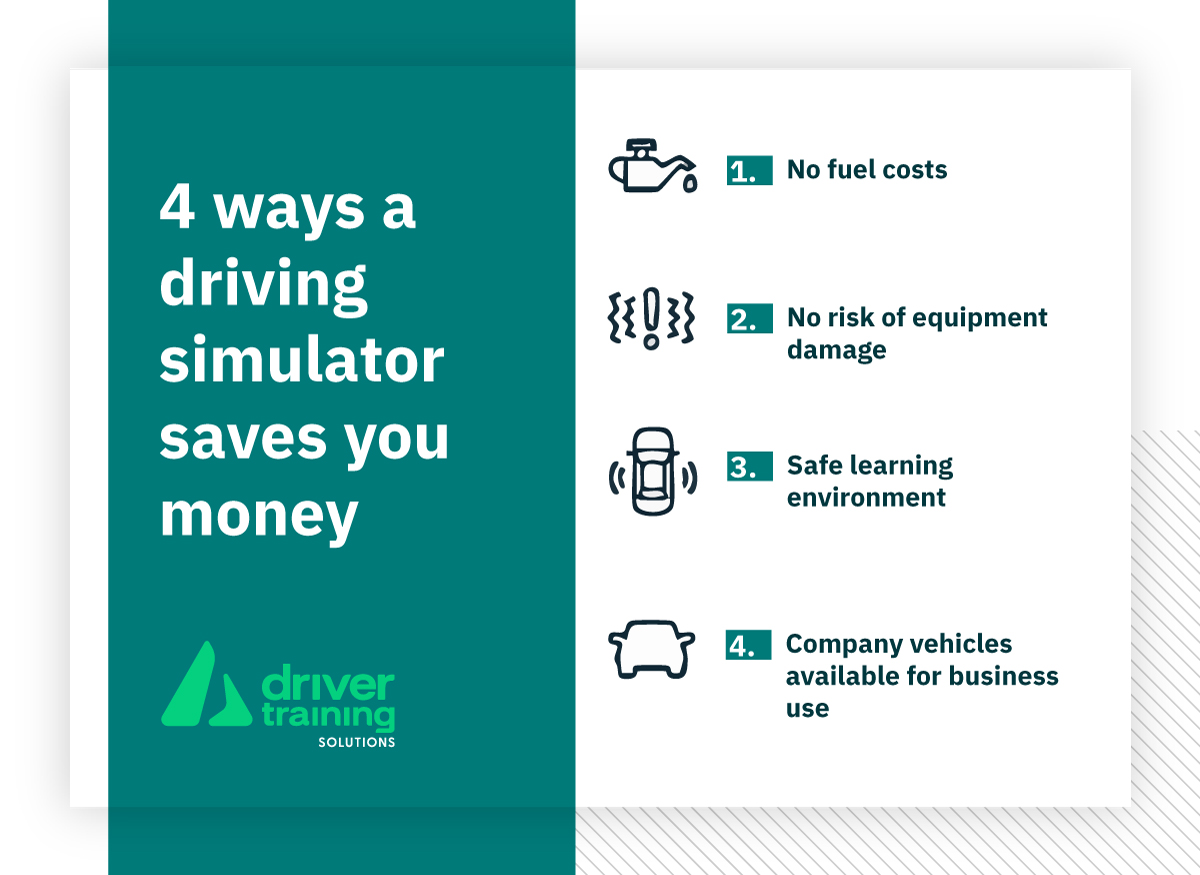
A simulator allows company vehicles to be used for business - not training. While your new employees learn in a virtual environment, your rigs are available for business. Simulators also help when you want to scale your fleet for the same reason. You do not want daily operations to suffer while training new drivers.
Simulated training saves your business money. First of all, it reduces the need for repairs or costly maintenance checkups by moving some practice into a simulator-based environment. Additionally, with fuel costs rising, you will save money by eliminating the fuel costs tied to training.
Finally, some insurance providers offer discounts to fleets that invest in simulator-based training, thanks to the reduced accident risk and improved driver readiness.
Our simulators feature the Instructor Operator Station (IOS), which offers a variety of tools to help trainers improve their skills and training sessions. It also ensures training is consistent even if the trainers change - which is crucial for larger fleets that need multiple trainers.
The IOS has an incredible range of post-simulation tools to provide customized feedback to suit individual drivers.
For example, Replay Studio™ allows trainers to fast-forward and rewind the recorded simulation to show specific moments where a trainee made a mistake. It can also zoom in to highlight specific scoring violations so a trainer can better explain the mistake to the driver.
The instructor can look at a driver’s facial expressions and hand reactions for better physical guidance on controlling a vehicle.
Some of the simulator’s programs allow you to bypass any pass/fail criteria. Rather, you can choose to focus on identifying positive responses and ways for trainees to apply what they have learned. Instructors can highlight opportunities for growth and improvement. This positive coaching model helps drivers learn and improve, building confidence with every scenario they successfully navigate.
Our simulators offer a preprogrammed collection of simulations and training courses for trucking companies to use right away. In a DTS driving course, your drivers will learn essential truck driving skills such as:
We offer a customizable training program for fleets with drivers of various experience levels. You can create training that focuses on your business’s specific needs.
Training is a crucial retention tool. Drivers want to feel that their company cares about them. Investing in a top-of-the-line training technology that offers engaging learning shows drivers you care.
It also makes you more appealing to potential young drivers interested in joining the industry.
Here are some driving safety tips for employees to help them perform at their best:
Simulator-based driver training helps fleets prepare drivers with the skills they need to stay safe on the road and avoid accidents. With the right training technology and curriculum, organizations can develop the specific skills they need to improve their efficiency, safety and performance behind the wheel.
A division of Acron Aviation
Driver Training Solutions offers highly customizable products and services to support effective delivery of content and management of training effectiveness. Our services include professional grade driving simulators, driver training services, training programs, performance assessment engines and computer-based training.
